The Human Papillomavirus (HPV) vaccine, given in childhood, is important to the prevention of six different types of cancer – and the fear, pain, and loss that comes with a cancer diagnosis. In the United States, nearly 40,000 cancers are caused by HPV each year.1 This includes nearly all cervical and anal cancers and the vast majority of vaginal, vulvar, penile, and oropharyngeal (throat) cancers.
HPV
While there are more than 100 types of HPV, only about 40 types can infect these areas of the body, and only about 15 of those, referred to as high-risk or oncogenic types, are known to cause cancer. The remainder may sometimes cause benign growths called condyloma, warts, or papillomas.2
Screening
Currently, screening is available and recommended for only one type of HPV-associated cancer, cervical cancer. This screening detects the presence of high-risk HPV and/or changes to cells caused by high-risk HPV so they can be treated before progressing to cancer.3 Although estimates vary by region and demographic factors, approximately 75% of age-eligible women are up to date with their cervical cancer screenings, below national targets.4
Cancer Prevention Vaccine
A vaccine to protect against the most common high-risk types of HPV has been available in the United States since 2006. Though it was initially available only to girls, it was approved for use in boys in 2009, protecting them against anal, penile, and oropharyngeal cancer. Initially, the available vaccine prevented only against the two most common high-risk HPV types, but in 2014 an updated version was approved for use that protected against the seven most common high-risk types.5
Recommendation: All youth receive two doses of the vaccine between the ages of 9 and 14
It is recommended that all youth receive two doses of the vaccine between the ages of 9 and 14, with younger ages of administration generally resulting in greater effectiveness.6 For those starting the series after age 15, three doses are recommended. Catch-up vaccines, for those who haven’t yet started the series, are recommended through age 26. Those between the ages of 27 and 45 who have never been immunized may consider the HPV vaccine series in consultation with their care provider.7
HPV vaccine side effects are similar to other childhood immunizations such as injection site pain, redness, and swelling; headache; and fever. More serious side effects that can occur include allergic reactions or fainting (vasovagal syncope), though these are rare.8 The HPV vaccine has been uniquely targeted by persistent myths and medical misinformation, though scientists, experts, and those monitoring the vaccine have not found these to be credible.9
The HPV vaccine is incredibly safe and highly effective, with reductions in high-grade cervical disease
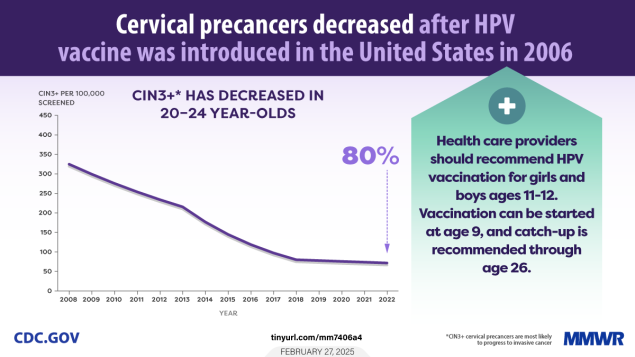
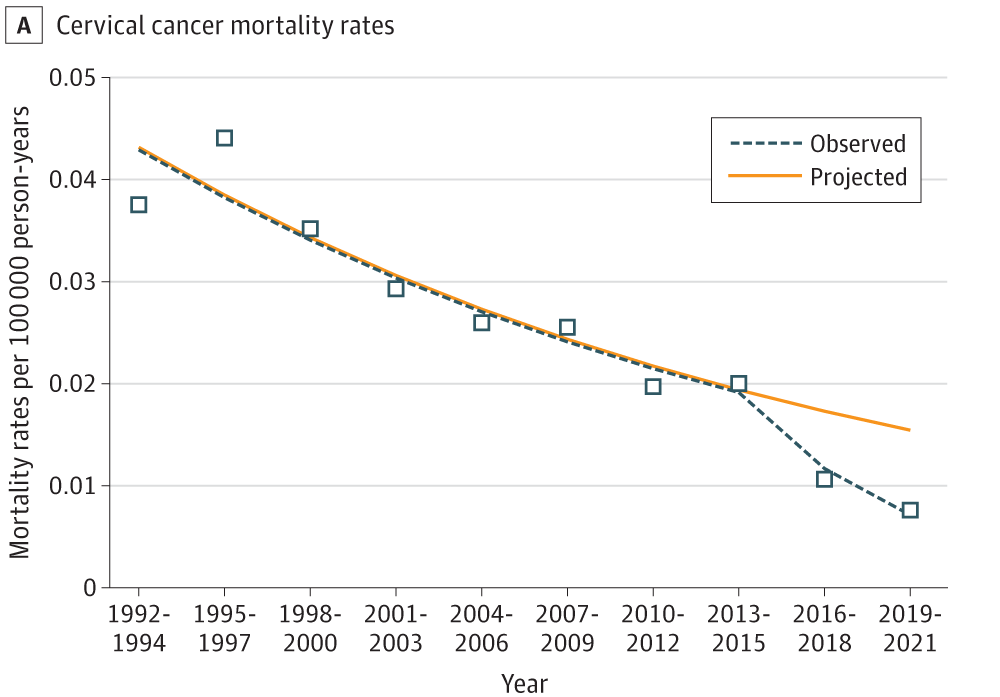
With nearly 20 years of real-world data (in addition to safety and efficacy studies prior to approval), the HPV vaccine is incredibly safe and highly effective, with reductions in high-grade cervical disease10 and declines far more than projected in mortality among very young women.11 As vaccinated women continue to age, we will see these effects among older women as well.
Resources:
- HPV Vaccination Recommendations by CDC
- HPV Vaccines by American Cancer Society
Written by: Corinne McDaniels-Davidson, PhD, MPH, MCHES®
San Diego State University School of Public Health
Footnotes
- 1 – https://www.cdc.gov/cancer/hpv/cases.html
- 2 – https://www.cancer.org/cancer/risk-prevention/hpv/what-is-hpv.html
- 3 – https://www.cancer.org/cancer/risk-prevention/hpv/hpv-and-hpv-testing.html
- 4 – https://progressreport.cancer.gov/detection/cervical_cancer
- 5 – https://sjr-redesign.stjude.org/content/dam/research-redesign/centers-initiatives/hpv-cancer-prevention-program/hpv-advocacy-campaign/history-hpv-vaccination.pdf
- 6 – https://pmc.ncbi.nlm.nih.gov/articles/PMC10399474/
- 7 – https://www.cdc.gov/vaccines/vpd/hpv/hcp/recommendations.html
- 8 – https://www.cancer.org/cancer/risk-prevention/hpv/hpv-vaccines.html
- 9 – https://www.paho.org/en/topics/immunization/debunking-myths-about-human-papilloma-virus-hpv-vaccine
- 10 – https://www.cdc.gov/mmwr/volumes/74/wr/mm7406a4.htm
- 11 – https://jamanetwork.com/journals/jama/fullarticle/2827212